By Dr. Umeshwar Pandey, Professor & HOD, LPS Institute of Cardiology, Kanpur | President, Cardiology Society of India – Uttar Pradesh Chapter
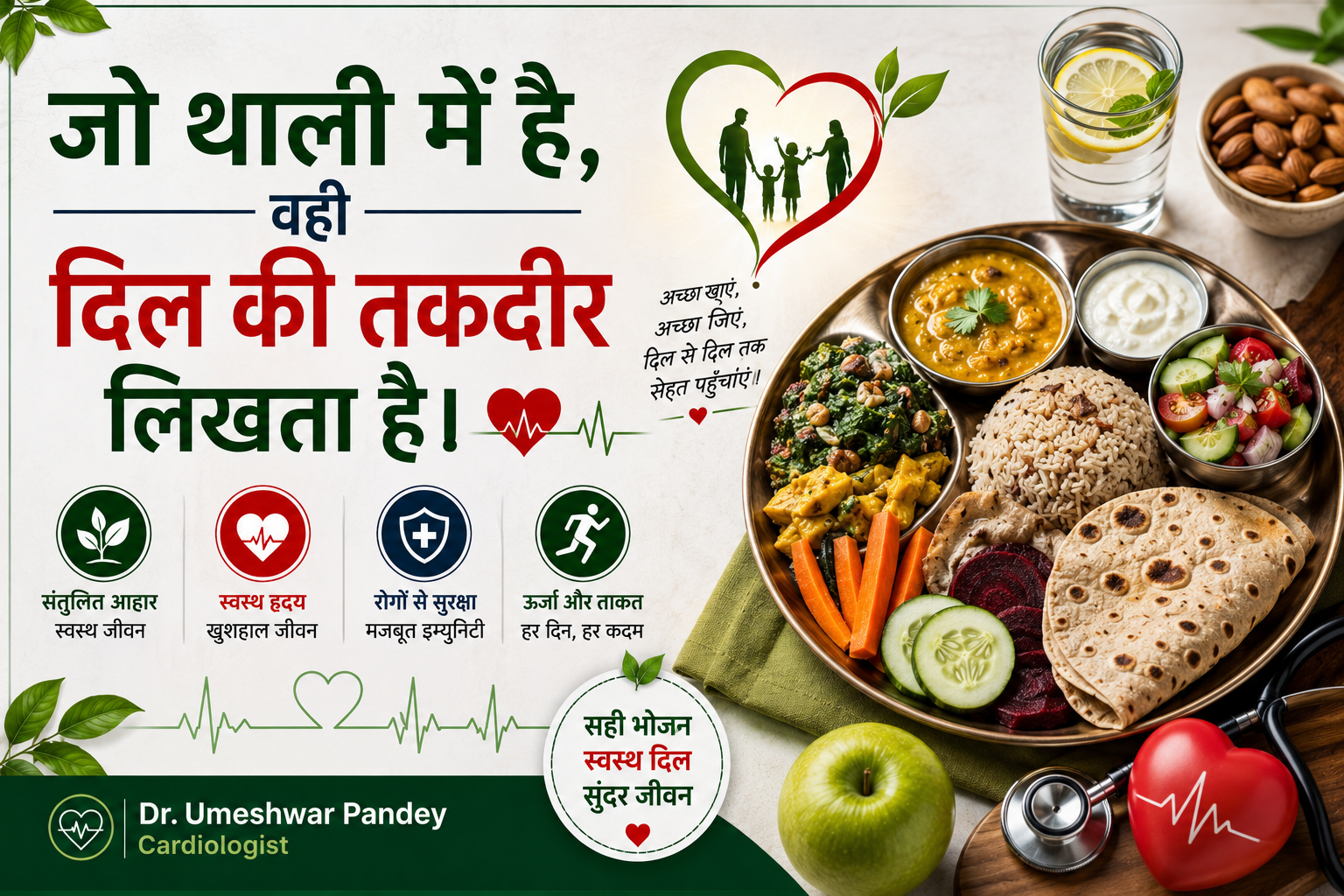
जो थाली में है, वही दिल की तकदीर लिखता है।
Every year, nearly 32 lakh Indians lose their lives to heart attacks. The statistic that should truly make us pause is this:
8 out of every 10 heart attack deaths are preventable.
Not through surgery. Not through stenting.
Simply through healthier eating habits and regular physical activity.
As a cardiologist, I witness this reality in my OPD every day. Today, I want to share what the latest ACC/AHA 2023 and ICMR guidelines recommend—explained in simple language that every Indian family can understand and implement.
Please read this carefully, save it, and share it. It may help protect someone you love.
“The most powerful medicine in cardiology is not in my prescription pad—it is in your kitchen.”
दिल की सबसे बड़ी दवाई आपकी रसोई में है — और यह बिल्कुल मुफ़्त है।
What Should Your Plate Contain?
A heart-healthy diet is built on the right balance of carbohydrates, proteins, and fats.
Carbohydrates (45–55% of Total Calories)
Choose complex carbohydrates such as:
- Jowar
- Bajra
- Daliya
- Oats
- Brown rice
- Sweet potato
Avoid or Minimize
- Maida
- White bread
- Refined flour products
Protein (20–25% of Calories)
Recommended intake: 0.8–1.2 g per kg body weight
Good protein sources include:
- Dal
- Rajma
- Moong
- Chana
- Egg whites
- Low-fat paneer
- Rohu and Singhara fish
Healthy Fats (25–30% of Calories)
Focus on unsaturated fats:
- Mustard oil
- Olive oil
- Walnuts
- Almonds
- Flaxseeds
Important Limits
- Saturated fat: Less than 7% of total calories
- Trans fat (vanaspati/dalda): Zero tolerance
Micronutrients: The Hidden Heroes
These nutrients play a crucial role in protecting your heart.
Omega-3 Fatty Acids (1–2 g/day)
Sources:
- Alsi (flaxseeds)
- Akhrot (walnuts)
- Mustard oil
- Rohu fish
Sodium
Limit sodium intake to:
Less than 2.3 g per day
Avoid:
- Namkeen
- Papad
- Achaar
- Packaged snacks
Dietary Fibre (25–30 g/day)
Sources:
- Isabgol
- Whole dals
- Palak
- Methi
- Fruits with skin
Potassium (3500–4700 mg/day)
Sources:
- Banana
- Coconut water
- Palak
- Tomato
- Sweet potato
Magnesium (300–420 mg/day)
Sources:
- Almonds
- Pumpkin seeds
- Dark chocolate (70%+)
Vitamin D (600–800 IU/day)
Sources:
- 20 minutes of morning sunlight
- Fortified milk
- Mushrooms
Antioxidants
Help prevent LDL oxidation.
Sources:
- Amla
- Guava
- Haldi
- Green tea
Hydration
Drink:
2.5–3 litres of water daily
Avoid:
- Packaged fruit juices
- Soft drinks
- Alcohol
A Heart-Healthy Indian Day: Sample Meal Plan
Breakfast
- Daliya or oats khichdi
- 1 egg white
- Green tea
- 4 soaked almonds
Lunch
- 2 bajra rotis
- Dal
- Palak sabzi
- Salad
- Low-fat curd
Dinner
- Small portion of brown rice
- Moong dal or fish
- Cooked vegetables
- Low-fat haldi milk
Healthy Snacks
- Seasonal fruits
- Coconut water
- Roasted chana
- Makhana
- Walnuts
Foods to Avoid
- Maida
- Vanaspati/Dalda
- Excess sugar (above 25 g/day)
- Namkeen
- Packaged juices
- Cold drinks
- Alcohol
Exercise: The Prescription Every Doctor Should Write
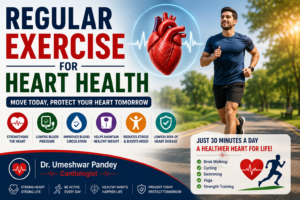
Regular physical activity is one of the strongest protections against heart disease.
Aerobic Exercise
Choose any of the following:
- Brisk walking
- Cycling
- Swimming
Goal
150 minutes per week
(30 minutes × 5 days)
Strength & Flexibility Training
Perform 2–3 times per week:
- Yoga
- Surya Namaskar
- Light weight training
Stress Management
Practice daily:
- Pranayama
- Anulom-Vilom
- Meditation
Duration
15–20 minutes daily
Important: If you already have heart disease, chest pain, or other cardiac symptoms, consult your cardiologist before starting a new exercise program.
Five Heart Rules to Remember for Life
1. Follow the Cardiac Plate Method
At every meal:
- ½ plate vegetables
- ¼ plate whole grains
- ¼ plate protein
2. Choose Healthy Oils
Replace:
- Ghee
- Butter
With:
- Mustard oil
- Other unsaturated oils
Keep saturated fat below 7% and eliminate trans fats completely.
3. Follow a Mediterranean-Style Eating Pattern
Research shows it can reduce cardiac events by up to 30%.
Focus on:
- Vegetables
- Legumes
- Fish
- Nuts
- Healthy oils
4. Prioritize Sleep
Aim for:
7–8 hours every night
Sleep is cardiovascular medicine—not a luxury.
5. Start Today
Heart disease prevention begins:
- In your kitchen
- On your morning walk
Do not wait for the next medical report.
Final Thought
“A heart attack rarely arrives without warning.
The warning is the life we have been quietly living.”
दिल की देखभाल एक विकल्प नहीं है — यह हमारी ज़िम्मेदारी है।
Share this article. One share could help save a life.
Take Action Today
- Save this article for your family.
- Share it with friends and loved ones.
- Follow for more evidence-based cardiac education from UPCSI.
Tags
#CardiacPrevention #HeartHealthIndia #DietForHeart #HeartAttackPrevention #CSIUP #UPCSI #KanpurCardiology #DrUmeshwarPandey #CardiologyEducation #HealthyIndia #दिल_की_सेहत #हार्टअटैक_से_बचें #PreventiveCardiology #HeartHealthyFood